


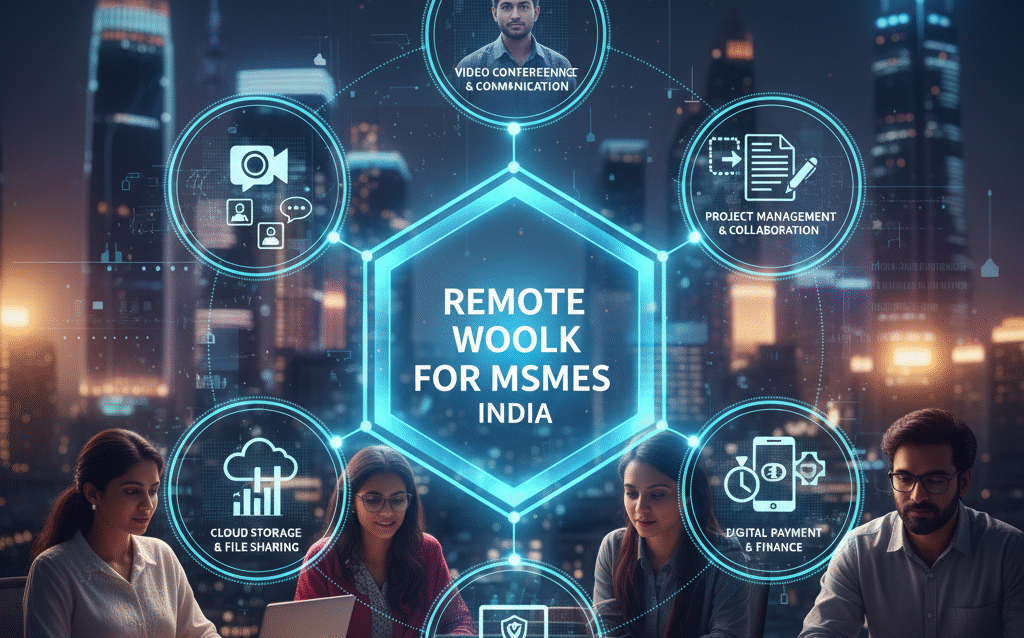
The Indian MSME landscape is undergoing a digital transformation, and remote work has become essential for survival and growth. Whether you’re running a manufacturing unit in Gujarat, a tech startup in Bangalore, or a consultancy in Delhi, adopting the right remote work tools can be the difference between staying competitive and falling behind. The challenge isn’t finding tools—it’s choosing affordable, scalable solutions that don’t strain your bootstrap budget.
Remote work tools empower MSMEs to access talent across India, reduce operational overhead, and improve employee satisfaction. In 2025, small businesses that embrace digital collaboration can scale faster and compete with larger enterprises. Let’s explore the remote work tools Indian MSMEs should adopt today.
Communication Tools: The Foundation of Remote Teams
Effective communication is the backbone of remote operations. Your team needs tools that streamline conversations, reduce email clutter, and enable real-time collaboration.
Slack remains the industry standard for team communication. Its channel-based structure keeps conversations organized, and integration with tools like Google Drive and Asana reduces time wasted searching for files. For MSMEs hesitant about Slack’s cost, Zoho Cliq offers a budget-friendly alternative built specifically for Indian small businesses. As an Indian SaaS product, Zoho Cliq integrates seamlessly with the entire Zoho ecosystem, making it ideal for MSMEs already using Zoho CRM or other Zoho products.
For video conferencing, Zoom and Microsoft Teams lead the market. Free tiers work for teams under 40 minutes per call, but paid plans unlock cloud recording and compliance features essential for regulated industries.
Project Management: Keeping Everyone on the Same Page
When teams work remotely, chaos ensues without proper project tracking. Indian MSMEs need affordable yet powerful project management solutions.
Trello is intuitive and perfect for small teams just starting with remote work. Its kanban-style boards help visualize workflow, and mobile apps keep teams informed on the go. For growing teams needing more complexity, ClickUp offers an all-in-one platform with task management, docs, and automation at $7 per user monthly—an excellent value for budget-conscious businesses. Asana works best for marketing teams and agencies managing multiple client projects simultaneously.
These tools eliminate the need for endless status meetings, allowing teams to stay updated asynchronously—a game-changer for distributed teams across different time zones.
File Sharing and Collaboration: Security Meets Simplicity

Remote work means files live in the cloud. MSMEs need secure, easy-to-use file sharing solutions.
Google Workspace is the go-to choice for most Indian MSMEs. Gmail provides professional communication, Google Drive enables real-time document collaboration, and Google Meet handles video conferencing. For teams managing sensitive client data, Workspace’s shared Drives feature allows fine-grained permission control. Dropbox serves as an alternative for businesses prioritizing file storage over collaboration.
Pro tip: Use shared Drives to centralize SOPs, client proposals, and invoice records—eliminating confusion about which version is current.
Time Tracking and Productivity: Measuring What Matters
MSMEs managing multiple projects or clients need transparency on how time is spent.
Toggl Track makes time logging effortless. Set it and forget it—automatic tracking reduces manual data entry. Zoho People integrates with other Zoho products and provides HR teams visibility into team productivity. For service-based MSMEs billing clients hourly, accurate time tracking directly impacts revenue and profitability.
CRM and Customer Management: Scaling Customer Relations
As MSMEs grow, managing customer relationships becomes complex. Zoho CRM is tailor-made for Indian small businesses. It tracks leads, automates follow-ups, and provides visibility into the sales pipeline. An electronics wholesaler in Delhi reportedly improved lead conversion by 40% after implementing Zoho CRM, proving that customer data management directly impacts bottom-line growth.
Payment Processing: Getting Paid on Time
Remote operations mean customers are spread across geographies. Razorpay solves payment collection for Indian MSMEs, accepting UPI, cards, net banking, and digital wallets. Automation of recurring payments reduces administrative burden, and instant settlements improve cash flow—critical for growing businesses.
The Competitive Advantage
MSMEs adopting these remote work tools see up to 25% improvement in output, according to research by Gallup. The compounding effect is significant: streamlined communication reduces meetings, better project management minimizes rework, and accurate time tracking improves billing accuracy.
The cost argument is simple. A small team of five people using Slack, ClickUp, Google Workspace, and Toggl Track spends roughly ₹3,000-4,000 per month—far less than the overhead of maintaining a physical office or the productivity lost to miscommunication.
Choosing Your Tech Stack
Start small. Don’t implement all tools simultaneously. Begin with communication (Zoom/Teams), project management (Trello), and file sharing (Google Workspace). Add specialized tools like Zoho CRM, Razorpay, or time tracking as your team grows.
Integration matters. Tools from the Zoho ecosystem integrate seamlessly—if you use Zoho CRM, Zoho Cliq and Zoho People become natural additions. Similarly, Google Workspace integrates deeply with most third-party apps.
Conclusion
Remote work isn’t a trend for Indian MSMEs—it’s a necessity for staying competitive. The businesses scaling fastest in 2025 are those that embrace digital tools, reduce friction in collaboration, and trust their teams to work effectively from anywhere. The right remote work tools transform MSMEs from location-dependent businesses into agile, scalable enterprises capable of competing nationally and globally.
Start today. Choose tools aligned with your immediate needs, build momentum, and expand your tech stack as you grow. Your competition likely already has these tools in place. The question is: will you catch up?
