


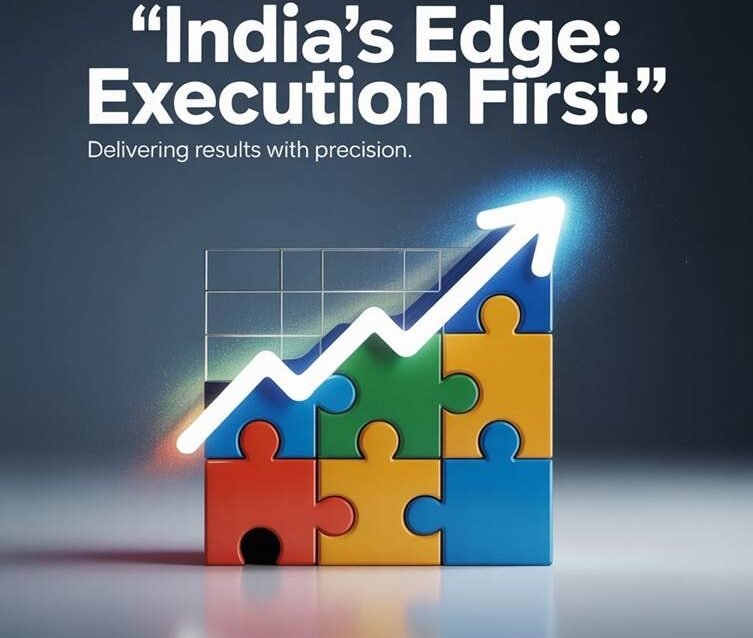
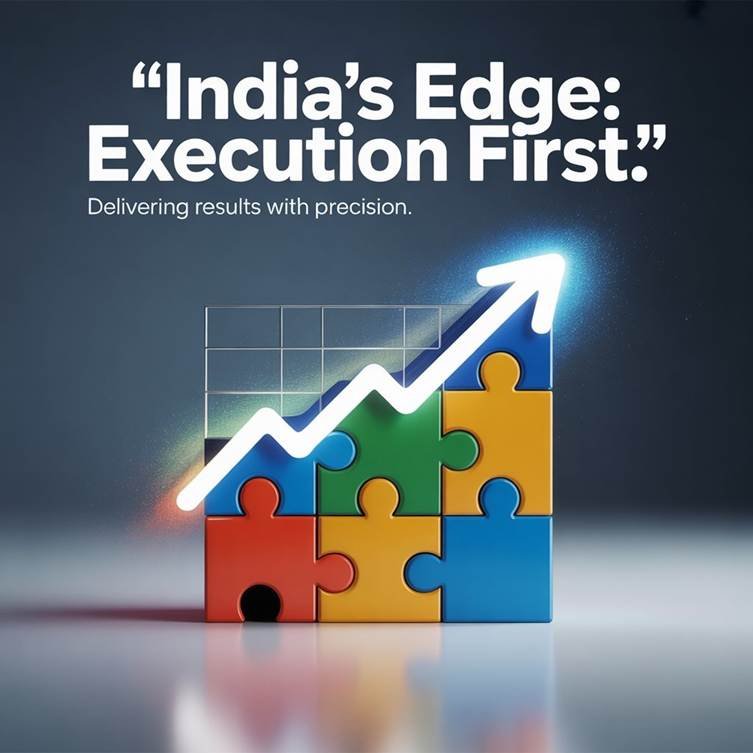
In India, Execution Beats Innovation Every Single Day.
In India, Execution Beats Innovation Every Single Day India is a land where thousands of new ideas are born every day. In every street, every startup hub, and every small town, someone comes up with their “next big idea.” But the reality is simple: an idea is just a spark; the real fire is ignited by execution. Whether it’s startups, MSMEs, or large corporate houses, India has proven time and again that simply innovating isn’t enough. Success comes to those who implement their ideas, adapt, and consistently scale. In this blog, we will look at why execution is more powerful than innovation in India, and how it has become our biggest advantage.
Why Execution Matters More Than Innovation in India
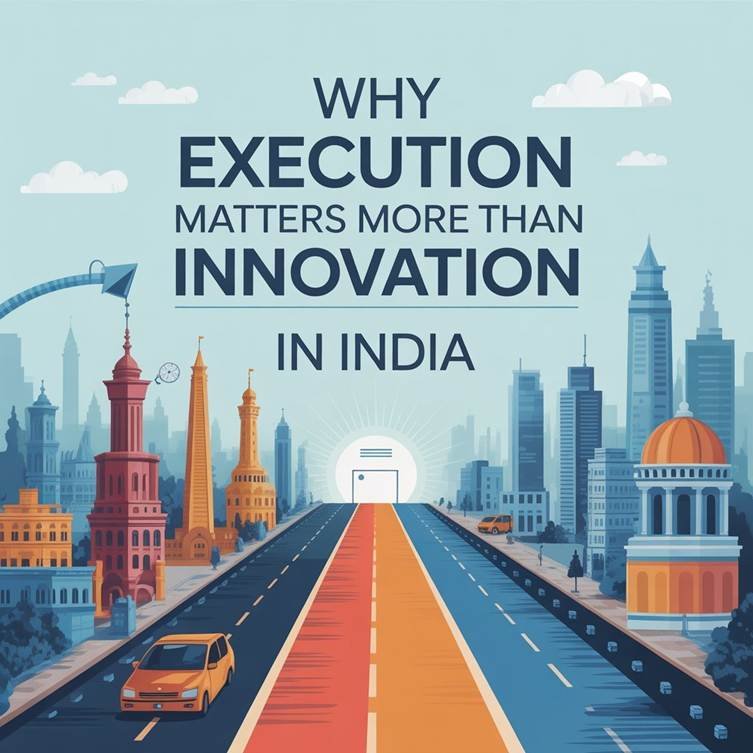
- Abundance of Ideas: Every corner of India is buzzing with innovative concepts, from tech startups in Bengaluru to grassroots entrepreneurship in small towns. However, execution requires discipline, consistent effort, and practical systems, which many fail to prioritize.
- Market Scale and Diversity: With 1.4 billion people, India offers a challenging and heterogeneous market. Execution ensures that a good idea is adapted to diverse local needs, languages, and affordability. Even innovative solutions fail if not rolled out effectively across these complexities.
- Proven Models Outperform Novelty: Companies like Flipkart, Ola, and Paytm didn’t invent new models—they brilliantly executed existing global ideas within the Indian context. They localized their strategies, built trust, and scaled rapidly. This shows that localized execution beats untested innovation.
- From Jugaad to Juggernaut: India has another cultural phenomenon: jugaad. Jugaad is a mindset where people find solutions even with limited resources. But today’s India isn’t just about jugaad. Jugaad is the first step to execution, but long-term scale requires processes, systems, and vision.
- Government and Execution Mindset; Not just the private sector, the Indian government has also demonstrated an execution-first approach. The rollout of Aadhaar was the world’s largest biometric ID project – and it succeeded because of its scale and execution. UPI (Unified Payments Interface) created a new financial infrastructure that has become a global benchmark today. All these initiatives are proof that for India, execution is not just an option, but a core strategy for survival and growth.
Lessons for Entrepreneurs and Businesses

- So if you’re building a business in India, here are some key takeaways:
- Don’t overvalue ideas – Everyone has an idea, the only difference is execution.
- Adapt locally – Don’t blindly copy a global model; reshape it for India’s diverse audience.
- Be consistent – Overnight success is a myth. Execution requires patience and consistency.
- Be customer-centric – Always design your execution with the end-user in mind.
- Build systems – Jugaad won’t work after a while; only structured execution can achieve scale.
Conclusion: India’s Superpower
Innovation is a spark, but a spark only provides light. If it is to create a flame, and turn that flame into a bonfire, execution is the only way. India’s biggest advantage is this: we don’t lack ideas, but rather our passion to adapt, implement, and scale them. This is why India has become an execution powerhouse for the world today. The next time you think of a new idea, listen to a startup founder, or see the headlines of a government scheme – remember: In India, execution beats innovation. Every. Single. Day.
